
- Index
- Binding
- Broadside (2)
- Brochure / Pamphlet (12)
- Cloth (62)
- Disbound (4)
- Fine Binding (72)
- Hard Back (2)
- Hardback (9)
- Hardcover (1072)
- Hardcover W / Jacket (3)
- Leather (369)
- Leather Bound (3)
- Manual Binding (3)
- Military & War (2)
- Original Hardcover (2)
- Paperback (2)
- Softcover (3)
- Softcover, Wraps (72)
- Other (970)
- Format
- Genre
- Americna Civil War (2)
- Art (2)
- Civil War (2)
- Fiction (6)
- Historical (7)
- Historical, History (6)
- Historical, Military (4)
- History (200)
- History, Civil War (3)
- History, Military (21)
- Juvenile Fiction (2)
- Juvenile Nonfiction (9)
- Military (32)
- Photography, History (2)
- Reference (24)
- Society & Politics (2)
- Superheroes (7)
- U.s. Civil War (2)
- War & Combat (6)
- Other (2325)
- Language
- Number Of Pages
- Topic
- Agriculture (8)
- American (us) (19)
- American Civil War (9)
- American History (6)
- Bible (11)
- Books (8)
- Books, Civil War (32)
- Christianity, Bibles (76)
- Civil War (268)
- Civil War (1861-65) (1108)
- Classics (48)
- English Civil War (8)
- Historical (47)
- History (14)
- Literature (9)
- Military (23)
- Poetry (6)
- Religion (6)
- The Civil War (7)
- United States (20)
- Other (931)
Antique 1856 Charles Sumner Speeches Civil War Anti-Slavery Book 1st Ed BOSTON
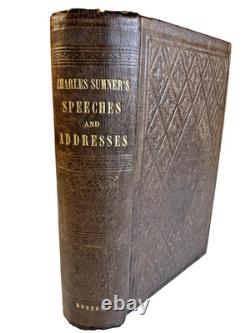
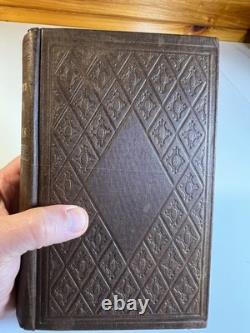
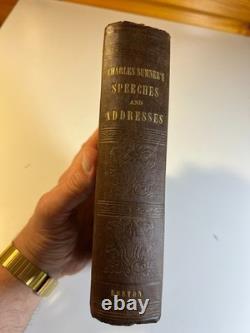
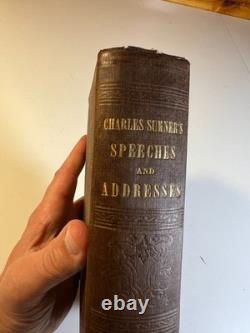
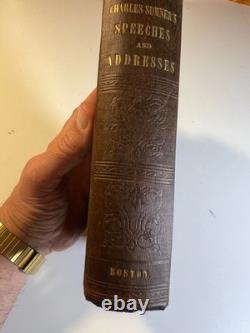
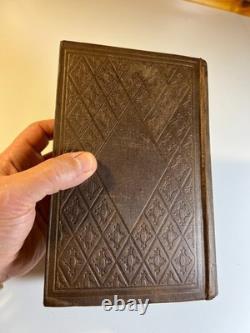

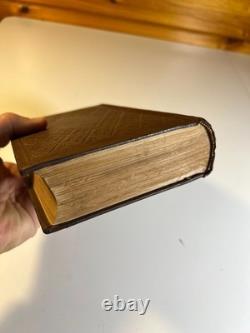

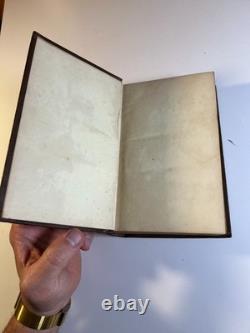
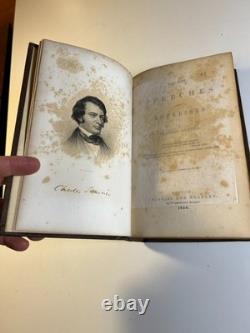
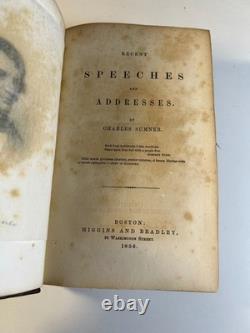
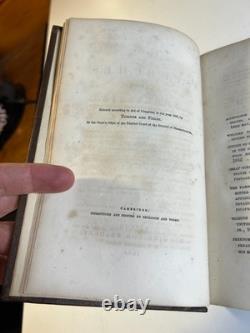
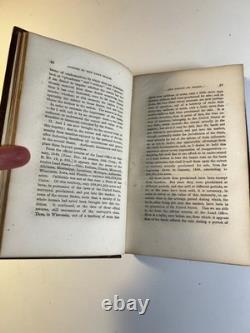
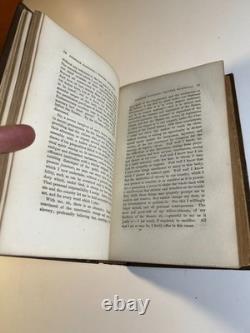
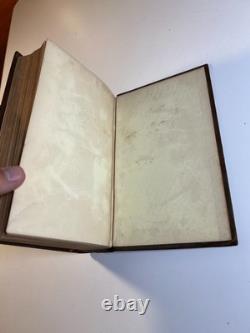
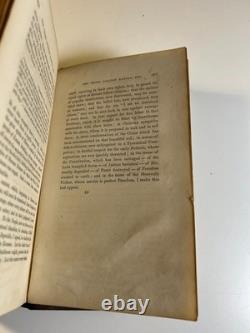
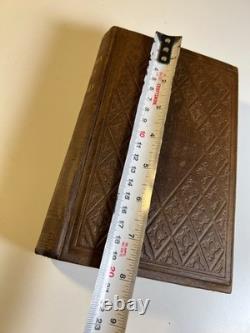
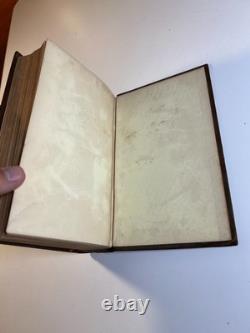
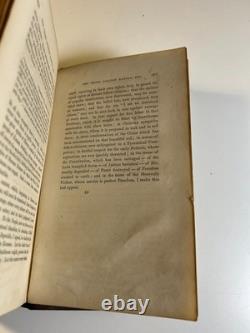
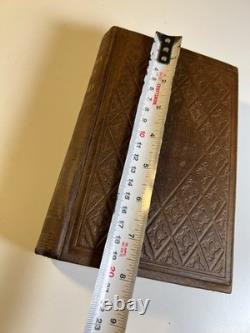
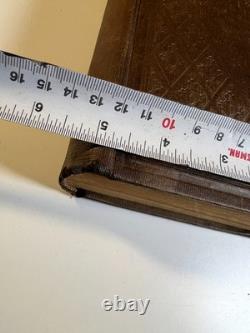


Boston: Higgins and Bradley, 1856. An outstanding and increasingly scarce 1856 first edition of Charles Sumner's. Preserved in remarkably attractive original condition and representing one of the most important political publications of the decade immediately preceding the American Civil War. Bound in its original embossed brown publisher's cloth with bright gilt spine lettering, this volume survives with exceptional eye appeal. The decorative blind stamping remains crisp, the binding is tight and structurally sound, and the engraved steel portrait frontispiece is present. Aside from expected age-related foxing to the preliminary pages and some loss to the upper spine cloth, the book remains an impressive example that has clearly been well cared for over the last 170 years. More than simply a first edition, this is a firsthand artifact from one of the most volatile moments in American history. Published in the very same year Charles Sumner was nearly beaten to death on the floor of the United States Senate for his anti-slavery convictions, this book preserves the words that helped ignite a national reckoning. Few volumes better capture the moral, political, and constitutional crisis that pushed the United States toward Civil War. For collectors of Americana, abolitionist history, Civil War material, or landmark political works, this is far more than a book-it is a surviving witness to the moment the nation began tearing itself apart.
A Book That Helped Push America Toward Civil War. Few books can honestly claim to have been published at the exact moment history was exploding around them. This is one of them. When this volume rolled off the presses in Boston in 1856, America was already tearing itself apart over slavery. The nation had become so divided that members of Congress were carrying pistols and Bowie knives onto the Senate floor, and violence in the streets was becoming increasingly common.
Only days after delivering his blistering anti-slavery speech "The Crime Against Kansas, " Charles Sumner was ambushed at his Senate desk by South Carolina Congressman Preston Brooks, who beat him over the head with a heavy gutta-percha cane until the weapon shattered. Sumner, trapped beneath his bolted desk and drenched in blood, struggled to free himself as Brooks continued striking him again and again. The attack nearly killed him. News of the assault raced across the country.
In the North, Sumner became a martyr for freedom. In the South, Brooks became a hero, receiving dozens of replacement canes from admirers inscribed with chilling messages such as Hit him again. This book was published during that very year.
To hold it is to hold a witness to one of the greatest turning points in American history. Charles Sumner was not merely another senator. He was among the most educated constitutional scholars of his generation, a fearless abolitionist who refused to compromise with slavery when compromise was politically convenient. At a time when many politicians sought moderation, Sumner demanded moral clarity.His speeches helped redefine the national debate by arguing that slavery was not simply an economic issue or regional custom-it was fundamentally incompatible with the principles upon which the United States had been founded. His words so enraged his opponents that they answered arguments with violence. The beating of Charles Sumner became one of the clearest signs that America's political system was collapsing. Five years later, the Civil War would begin.
A Nation on the Brink. The year 1856 was one of the most explosive in American history. Kansas had descended into open warfare between pro-slavery and anti-slavery settlers in what became known as Bleeding Kansas.
The newly formed Republican Party was emerging almost entirely around opposition to the expansion of slavery. Families, churches, newspapers, and entire communities were splitting apart over the issue. Violence had entered Congress itself. Many Americans were beginning to believe that ballots would soon give way to bullets.This volume captures those tensions while they were still unfolding-not through hindsight, but through the words of one of the men standing at the center of the storm. Six Eye-Opening Facts About This Book.
The author was nearly murdered the same year this book was published. Charles Sumner spent years recovering from the Senate caning and suffered chronic pain for the remainder of his life. His empty Senate desk became a national symbol. Massachusetts repeatedly reelected him while he was too injured to serve, deliberately leaving his seat vacant as a reminder of the attack. The attack accelerated the march toward Civil War.
Many historians view the assault on Sumner as one of the final moments proving peaceful compromise between North and South was breaking down. Southern supporters celebrated the violence. Preston Brooks received replacement canes from admirers, some engraved with messages encouraging him to repeat the assault. Sumner later became one of the most influential voices of Reconstruction. After the Civil War, he fought relentlessly for equal civil rights and legal protections for formerly enslaved Americans. His ideas lived on long after his death. His demand for "equality before the law" anticipated principles that would not be fully realized until nearly a century later during the Civil Rights Movement. Six Powerful Excerpts from the Book.The true grandeur of nations is in justice, not in power. A reminder that moral authority-not military might-is the foundation of lasting greatness. Freedom is national; slavery is sectional. Perhaps Sumner's most famous formulation, arguing that liberty belongs to the entire nation while slavery exists only by local exception. The Constitution nowhere recognizes property in man.
A direct rejection of the idea that human beings can legitimately be owned. Justice to the Land States. In discussing western expansion, Sumner insists that public policy should serve fairness and opportunity rather than entrenched interests.
Far ahead of his time, Sumner advocated making communication affordable and accessible, believing ideas should travel freely between nations. The Pardon of the Fugitive Slave. Original embossed brown cloth binding with bright gilt spine lettering. The decorative covers remain attractive with crisp blind stamping and solid structure.There is noticeable loss and fraying along the top edge of the spine cloth consistent with age. The engraved portrait frontispiece is present, and the title page is dated 1856.
Moderate foxing is present on the portrait and title pages, while the balance of the text remains generally clean with only scattered age toning. The binding is tight and the volume remains an excellent survivor from one of the most consequential years in American history. More than simply a book, this is a tangible artifact from the moment America crossed the point of no return-a volume whose author was beaten nearly to death because of the very ideas contained within its pages.