
- Index
- Binding
- Broadside (2)
- Brochure / Pamphlet (12)
- Cloth (62)
- Disbound (4)
- Fine Binding (72)
- Hard Back (2)
- Hardback (9)
- Hardcover (1079)
- Hardcover W / Jacket (3)
- Leather (373)
- Leather Bound (3)
- Manual Binding (3)
- Military & War (2)
- Original Hardcover (2)
- Paperback (2)
- Softcover (3)
- Softcover, Wraps (72)
- Other (982)
- Language
- Region
- Subject
- American (3)
- American Civil War (2)
- American History (13)
- Americana (57)
- Art & Photography (4)
- Bible (14)
- Books On Collecting (3)
- Children's (2)
- Civil War (59)
- Congressional Record (3)
- Government (2)
- History (347)
- Illustrated (7)
- Law & Government (11)
- Literature & Fiction (76)
- Military & War (835)
- Military History (3)
- Poetry (2)
- Reference (12)
- Science & Medicine (9)
- Other (1223)
- Topic
- Agriculture (8)
- American (us) (19)
- American Civil War (9)
- American History (6)
- Bible (11)
- Books (8)
- Books, Civil War (32)
- Christianity, Bibles (76)
- Civil War (271)
- Civil War (1861-65) (1114)
- Civil War, War (7)
- Classics (48)
- English Civil War (8)
- Historical (47)
- History (14)
- Literature (10)
- Military (23)
- Poetry (6)
- The Civil War (7)
- United States (20)
- Other (943)
- Year Printed
Antique Victorian 1862 Gunn's Domestic Physician Leather Medical Book Civil War
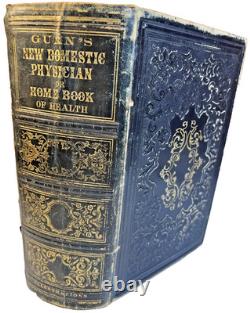

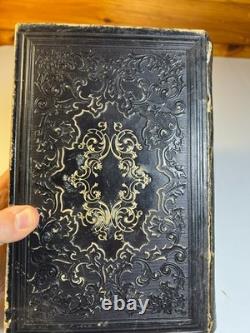



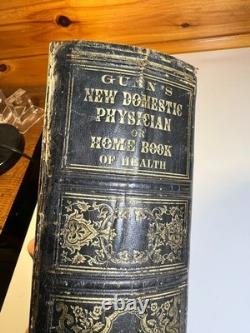

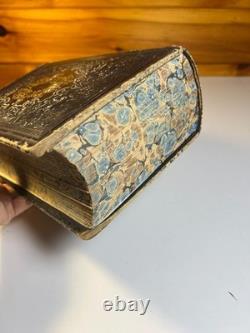
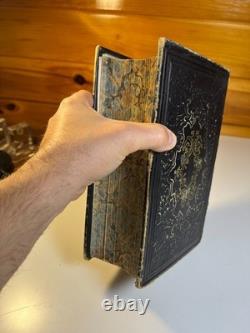
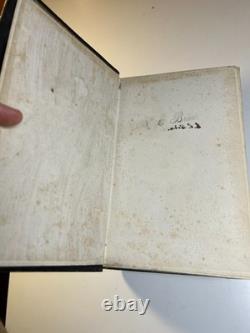

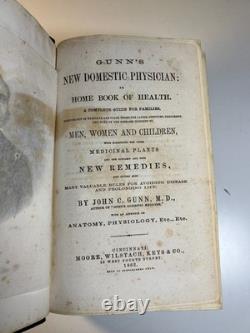
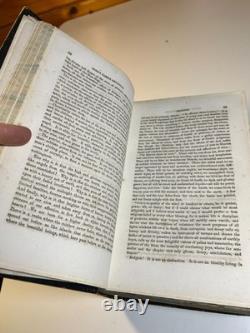



1862 Gunn's New Domestic Physician Antique Leather Medical Book Herbal Remedies. A striking Civil War-era household medical volume, Gunn's New Domestic Physician; or, Home Book of Health, by John C. Published in Cincinnati, Ohio, by Moore, Wilstach, Keys & Co.
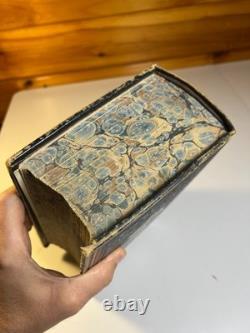
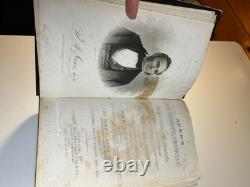
25 West Fourth Street, in 1862. With its richly decorated leather binding, elaborate gilt spine, embossed ornamental covers, marbled endpapers, and beautifully marbled page edges, this is a substantial and visually impressive example of nineteenth-century American medical publishing. Inside, it offers something equally compelling: a window into how families understood sickness, sought relief, and confronted medical emergencies during Abraham Lincoln's presidency. The title page advertises "A Complete Guide for Families", covering the causes, symptoms, treatment, and cure of diseases affecting men, women, and children, together with medicinal plants, new remedies, and an appendix on anatomy and physiology.
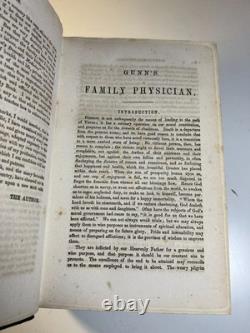
This was intended to bring medical knowledge into the home, explaining illness in language ordinary readers could understand. Its scope combines disease recognition and treatment, medicinal plants and household remedies, the workings of the human body, and advice on preserving health and prolonging life.The introductory material also reveals that Gunn's interests extended beyond physical symptoms. Health, personal habits, family life, emotions, morality, and religious belief all occupied the same medical world. A printed endorsement specifically draws attention to discussions of the passions, mothers, wives, husbands, young men, early rising, and sleep. Books of this kind served households for whom a physician might be distant or expensive. Their pages offered reassurance, practical guidance, and sometimes extraordinary claims-capturing a period when the family bookshelf could also function as the family medical cabinet.
The Author And His Unusual Opening Announcement. Gunn was the physician behind the widely circulated. Originally published in Knoxville, Tennessee, in 1830.
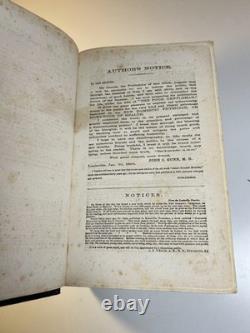
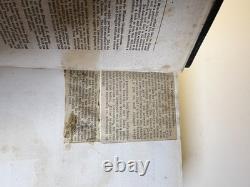
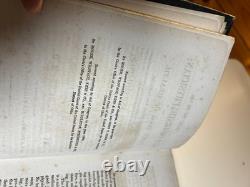
This later work belongs to his continuing effort to make medical information accessible to families. One of the most memorable passages appears before the main text even begins. In an author's notice dated Louisville, January 30, 1860, Gunn finds it necessary to correct reports of his own death. He then announces that he is preparing his life story under the title. An unusually personal introduction to a medical reference book-and a wonderful detail for anyone who enjoys the unexpected voices preserved in old books. An Eye-Opening View Of Illness. The introduction immediately establishes how closely medicine and religious instruction could be intertwined. Disease is not unfrequently the means of leading to the path of Virtue; it has a salutary operation on our moral constitution, and prepares us for the rewards of obedience. "No virtuous person, then, has reason to complain. These passages make the book especially interesting as social history. It addresses the reader's understanding of suffering and moral responsibility alongside the treatment of the body. Pasted Newspaper Remedies And A Loose Handwritten Note. This particular copy includes two fascinating additions that give it an individual household character.A newspaper clipping is pasted onto a preliminary page. Headed "Two Practical Remedies, " it promotes supposed treatments for diphtheria and pneumonia. Its diphtheria item recommends a preparation involving raw onions and alcohol and confidently declares. "The lumps will disappear like magic. It goes so far as to claim that a physician could cure a patient even when.
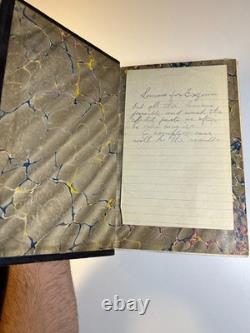
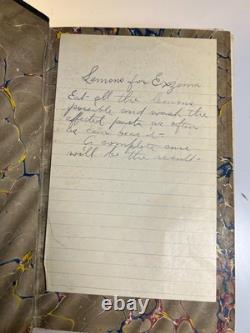
The face had turned black. A further clipping headed "Cure for Catarrh" discusses glycerine and carbolic acid.These remarkable claims illustrate the medical advice readers encountered and considered worth saving. Also included is a separate, loose handwritten note, headed "Lemons for Exzema" -spelling as written. It recommends eating lemons and washing the affected areas, concluding.
A complete cure will be the result. The handwritten note is free-floating and is not pasted into the book. Its writer and date are unidentified.
Both the note and newspaper material are additions to this copy, rather than passages authored by Gunn. An attractive antique volume with strong decorative presence and honest age-related wear. Ornately embossed leather covers with gilt ornamentation. Elaborately gilt-decorated spine with clearly legible title. Marbled endpapers and marbled page edges.
Engraved portrait frontispiece of John C. Gunn, with a printed facsimile signature beneath.
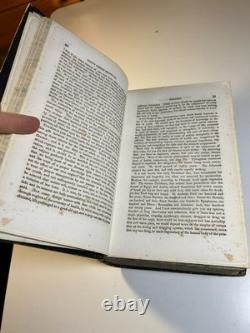
Everything remains tight and well bound, with intact hinges. A visible cosmetic crack/split in the leather runs along the rear/left exterior spine-joint area, as photographed; the binding remains firm. Rubbing, scuffing, and wear to the leather, particularly at the edges, corners, and spine ends. Scattered foxing, age toning, and localized staining to the paper, including the preliminary leaves and portrait area.Separate handwritten remedy note included loose. A compelling piece for collectors of antique medicine, herbalism, domestic history, nineteenth-century bookbinding, and historical medical curiosities. The decorative binding makes an impressive display, while the contents and saved remedies preserve a far more personal story of illness, hope, and household resourcefulness. Offered as a historical collectible. The medical claims and remedies are obsolete and are not intended for present-day use.